An Android user tests an iPhone

I’m currently on a plane.  I have a bunch of watch related posts to write, but technology is the first thing on my mind right now.

I showed up to my local Apple Store at 5am on the day the first iPhone launched, proudly jettisoned my Blackberry, and marveled at the groundbreaking device.  However, after a while I grew frustrated with AT&T service and decided to give Android a shot on another carrier.  This was a few years ago, and I have been an Android user ever since.  I love testing out the newest phones and am not shy to pay an early termination fee or buy a phone at full price, so in that span I have had 10+ Android phones.  Plus, I am a constant tinkerer so I have rooted them and tried various ROMs and customizations.  I have definitely gotten most everything out of the Android experience.

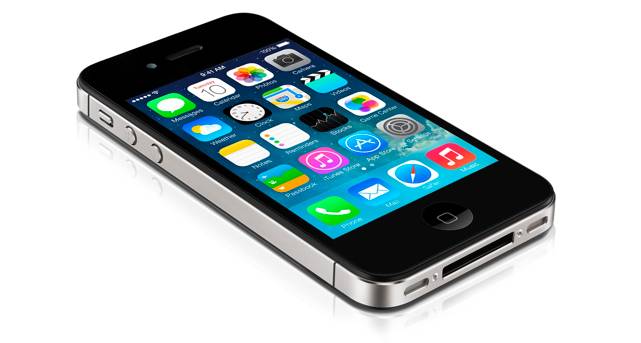
So, like any Android fanboy, I am eagerly anticipating the Galaxy Nexus, Google’s upcoming flagship phone sporting their newest operating system, Ice Cream Sandwich.  I am especially interested because my current phone, the LTE Samsung Droid Charge, is junk.  As Samsung and Google have repeatedly pushed the Nexus launch back, I figured now would be a perfect time to see what Apple has been working on for the last few years.  So I picked up an iPhone 4S and have been using it as my primary device for two weeks.

The short version of my verdict: it’s a great phone with some unfortunate shortcomings.

First, the biggest win for the iPhone is that the hardware and software just work.  Nearly every Android phone I’ve had suffers from some sort of hardware or software issue.  My current Droid Charge has faulty GPS that always thinks I’m a few blocks from where I am.  I’ve had two warranty replacements with the same issue so I believe it is inherent to the phone itself, not my personal device.  My previous phone, the HTC Thunderbolt, would drop it’s connection and never reconnect without me physically turning the phone off and on.  Apps force close.  Performance seems to slow to a crawl after a few weeks of use, not unlike older Windows PC’s that fly at first and slowly start to run like they’re stuck in tar.  Carriers load the phones with unnecessary programs that can’t be removed, manufacturers use their own “skins” which add ugly design and weird functionality straight on top of the OS that cannot be undone without rooting.  The whole thing is a bit of a mess that requires constant tinkering to get working just right.

The iPhone just works.  The phone does not hesitate to open or do what you ask it to.  Whatever the hardware specs, it never hesitates with anything, has only crashed once, and in general requires no tinkering at all.  This is a huge plus most of the time, and for any casual user it makes the iPhone almost a no brainer.  Unfortunately the negative is that what you see is what you get.  If you do want to tinker or change something, you don’t have many options.

Case in point, Google Voice.  I use Google Voice as my primary number.  Google Voice integration with the iPhone is miserable at best.  Whereas Android basically allows Google Voice to take over your phone, Apple has their dialer and address book locked down completely.  This alone may be a deal breaker for me.

And while iOS generally has a better App selection, Android still has the leg up with the most important Apps.  Google Maps on Android blows away maps on iOS.  Gmail is, not surprisingly, a million times better on Android than iOS where you are forced to use a web app.

And that brings us to Siri.  If you read any tech press, you haven’t escaped talk of Siri, Apple’s new voice controlled “personal assistant”.  Apple calls Siri a beta project and in my experience it has been just that.  Slow, unreliable and mostly unhelpful, Google voice search and voice control are much more useful.  ”Navigate to Pazzo Gelato” gets me instant turn by turn navigation to my favorite dessert.  My best use of Siri has been to set my alarm in the morning.

My last big point is LTE.  I cannot tell you how great Verizon’s LTE network is.  I get cable modem speeds with my phone.  I have not had to connect to hotel wifi in a year as I tether my laptop through my phone.  Apple absolutely has to put LTE chips in its next iPhone or it will fall woefully behind.

There are lots of other small plusses and minuses for each, but the bottom line is clear.  It is hard to overstate the value of having a device with fantastic build quality that works perfectly and clearly has had every element well thought out.  The iPhone is that device.  However, I am still eagerly awaiting the Nexus and will likely stay on Android for the foreseeable future.  The core apps are that good.  I just hope the hardware manufacturers can step up their game.

Can Foursquare Kill Daily Deals and Save the World?

I haven’t written a Tech Tuesday post in a while (or any post for that matter. sorry).  With a couple hours left, I thought I’d jot down something I’ve been thinking of quite a bit.

I love Foursquare.  To me, it is perhaps the coolest mobile app – the true future of mobile.  However, at present I have found almost no use for it.  For the last couple months, I have been forcing myself to check-in as often as I can remember.  I wanted to understand the service and see what I was missing.  To date I have 21 check-ins.  Granted I am not a power user, but in those 21 check-ins, the only benefit I’ve gotten is an occasional tip of what I should order in a restaurant.

This frustrates me.  We all know mobile is the future.  We all know location is a game-changer.  How can the biggest location specialist provide such little value to users?

I have become particularly interested in this after reading Rocky Agrawal’s series of pieces on TechCrunch on the danger of daily deals sites such as Groupon.  His general thesis is that the model is going to kill local businesses – driving too many cheapskate customers at prices that are too low.  It all comes down to loyalty.  Daily deals make sense for businesses if they create new, loyal customers.  A restaurant can serve a customer at a loss if it knows that customer will be back multiple times.  The problem is that these daily deals sites are actually destroying loyalty rather than creating it.  They are teaching customers bad habits.  And Groupon is incentivized against loyalty.  Their entire business rests on selling you the next deal at the next place.

Who is best positioned to drive loyalty?  Foursquare!  They can identify loyalty, reward loyalty, and ultimately create loyalty.  They are in a position to offer incredible value to brands, merchants and consumers (not to mention some nice value for themselves and their investors).

Why isn’t this happening?  Your guess is as good as mine.

Google Docs and Collaboration

Particularly helpful in any international business such as the watch industry, we are seeing all sorts of new services that allow for remote collaboration.  My favorite of these is Google Docs.  It is basically a productivity suite, comparable to MS Office, where everything is stored in the cloud including the “programs” themselves.  So, with nothing more than web browsers, users can collaborate on a same document, spreadsheet, or presentation from all over the world in real time.

Today, three animators released this video of the coolest 450 presentation ever made.  They were in three different locations and completed the project in three days.  Pretty amazing!  Enjoy.

Building Blade Runner

Not going to be able to write a full post today.  It is the last day of SIAR.  Show has been great so far, hopefully I’ll be able to write a post on it tomorrow.

In the meantime, check out this really cool video on the making of the effects in Blade Runner.  A neat look back to the time before computer generated effects.

http://douglastrumbull.com/key-fx-sequences-blade-runner-hades-landscape#

Tablets

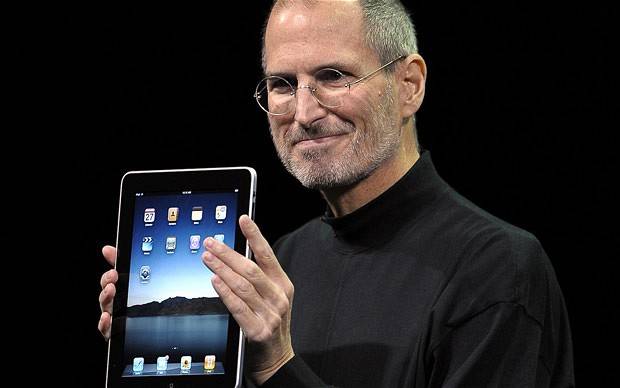
Companies have been trying to build tablet computers for years.  I remember playing with an Apple Newton nearly 20 years ago and thinking it was the future.  Finally, with the tremendous success of the iPad, it looks like tablets are here to stay.

Yesterday, RIM unveiled their Playbook.  Luckily for RIM, it looks like a worthy alternative.  In addition, multiple Android tablets are soon to hit the market including the Samsung Galaxy.

So who is going to win this war and how will the landscape look in the future?  I think eventually content will be ubiquitous across all the platforms.  Competition will drive prices way down with subscriptions and subsidies taking them eventually down to $0.  For example, perhaps if you buy a 2 year subscription to the Wall Street Journal, they will send you the tablet to read it on.  Or maybe Audemars Piguet will give you a branded tablet with their full catalog on it if you buy a watch.  Families will have communal tablets that sit on the kitchen table and act as portals to all of the content that they consume.

Of course this is what publishers and brands are dreaming of.  For a publisher, it is a format where hopefully people will pay for content.  For a brand, right now one of the biggest difficulties is figuring out where and how people are getting information.  A ubiquitous device would make it much easier to deliver a brand message.

Personally, I just love that we are still in the infancy of this technology.  I for one will be in line to buy each of these new tablets and test them out.  I’ll report my findings here.

Viral Videos

The ability for internet content to “go viral” is one of the most powerful marketing tools ever.  Indeed it is like a marketing atomic bomb.

While it is difficult to achieve a truly viral effect with a watch that appeals to such a small percentage of people, we do see network effects with our releases.  For example, we create our releases and time their distribution keeping in mind how they will go from one source to another in order to maximize their impact.  For example, HM4 made it onto sites like Engadget, CrunchGear, and The Coolist creating network effects well outside of the usual watch media.

For Tech Tuesday, I thought we’d look at a band that has become truly expert in creating viral videos: OK Go.  They have come out of nowhere and cemented themselves as one of the most popular groups in the world on the strength of their videos.

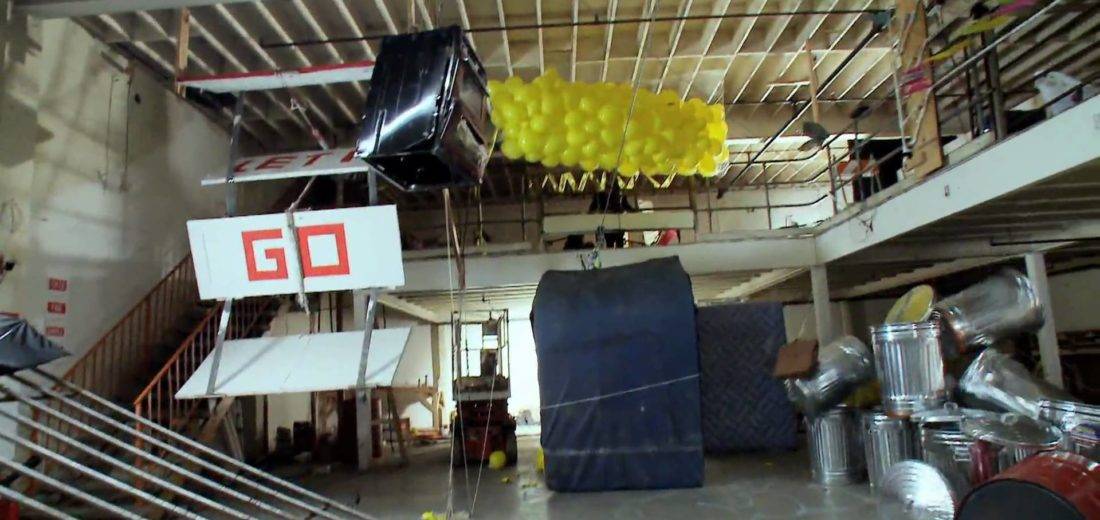
Everyone loves a Rube Goldberg machine!

And here is their latest, released yesterday:

What are the key elements that make these videos work?  They are both very creative, both extremely well done, and both done with a great sense of humor – all difficult to achieve and balance.  For a brand, it is a large investment and a big risk to create something like this, but imagine the fun when it gets traction and the views start growing exponentially!

Introducing TickTocking Mobile

For those of you who like to read on your mobile devices, I have created a mobile version of the site. You will automatically go to it if you visit the site from a mobile browser. If you prefer the full version, it is easy to switch back at the bottom.

Let me know if you like it, dislike it, or have any comments. I’m really happy you all are enjoying the blog – hopefully this makes it easier to read on the go.

Google, Arcade Fire, and the Future of the Internet

It’s Tech Tuesday again on TickTocking!  (I wish alliteration started with a T)

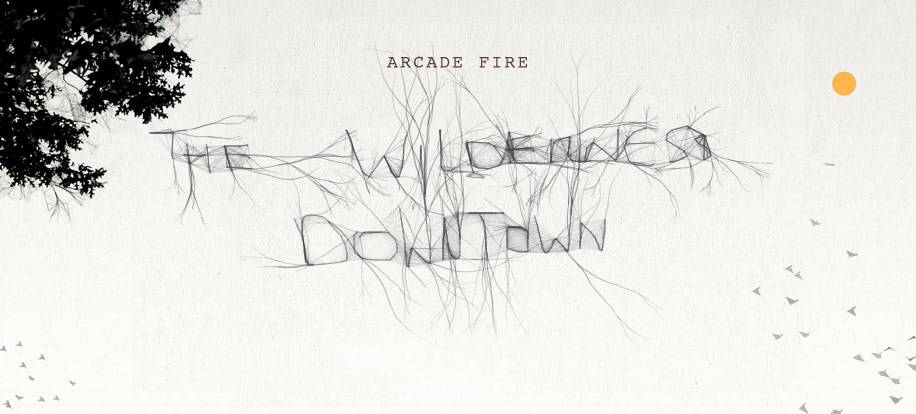
Yesterday Google released a new project called The Wilderness Downtown.  It is essentially a choreographed, interactive, personalized music video done in collaboration with Arcade Fire designed to showcase the capabilities of the modern browser.  If you haven’t seen it yet, you should definitely take a look.  Make sure you are using a browser optimized for HTML5, preferably Chrome or Firefox.

Obviously this is just an experiment: an initial effort in a whole new word.  The internet has already had a huge effect on the watch industry.  Things like this are good reminders that we are still at the very beginning of this revolution.  I am looking forward to seeing what the future holds.