If I Were Running Audemars Piguet North America

Last week, news broke that Audemars Piguet was parting ways with their CEO, Philippe Merk and replacing him (supposedly in interim) with François-Henry Bennahmias, formerly head of AP North America.

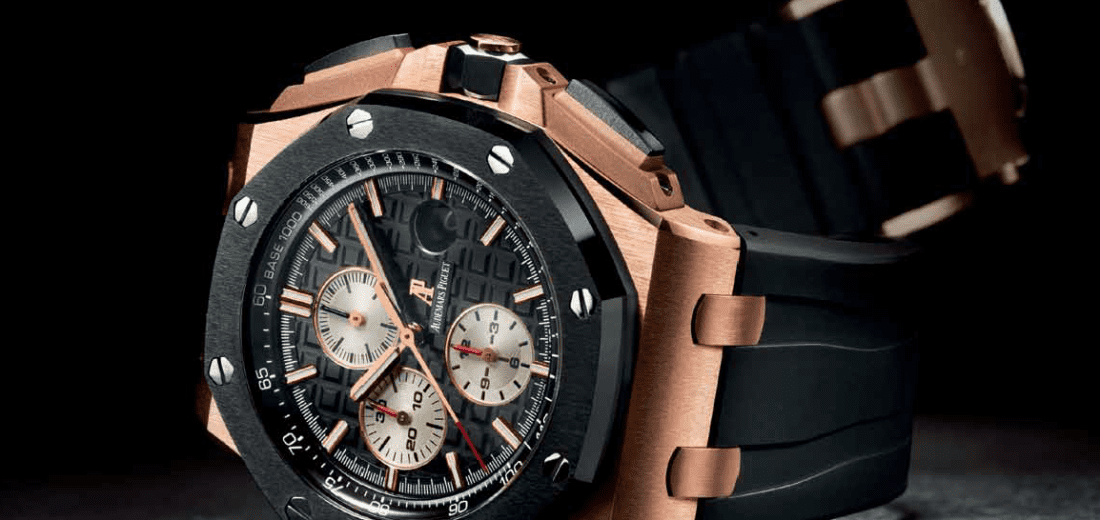
AP is my favorite “big” brand.  In fact, the watch I wear most often is an AP.  They have great products, great history, and many great people who work there.  They have the resources to do some amazing things.  So I couldn’t help but think: if they hired me to replace Francois, what would I do?

First, I would listen to the chime of the minute repeater that I made them give me as a signing bonus.  Then I would get down to serious business.

My focus would be on service and value.  The two are intricately related.  I would push them to finally take the jump into online sales and create a technology platform that offered the best user/customer experience in the business.  I would invest heavily in the US service center to the point that NO SERVICE SHOULD TAKE MORE THAN 4 WEEKS, with the eventual goal to turn out routine services and minor fixes in less than 2 weeks.

I would promote transparency and open dialogue.  I, myself, would be available continuously through social media and email and also empower other employees to be as well.  I would answer the tough questions honestly and make my positions very clear.  I would be swift in rectifying any and all instances of poor service from us or our partners.  Any customer willing to spend $10k+ on an archaic instrument deserves to be treated with utmost respect – not propitiation but true fairness.  This has to be hammered into the culture from the top down.

Chris Dixon, tech entrepreneur and investor, posted a great piece over the weekend on how people are now focused on experience rather than product.  Luxury brands have known this for a while, but have lost their way.  They see people tire of the experience, and think they have to focus harder on selling the product.  That’s why you see all sorts of BS claims on materials, movements, complications, etc.  What they’re missing is that the experience is still what’s important, they are simply selling the wrong experience.  The typical arrogance and elitism of luxury is not as effective anymore.  What people want is a company that is committed to doing things in the best possible way, with the utmost integrity, and that treats its fans and customers like family, not suckers.

There are plenty of other things to do, but I believe that if someone were to truly implement these few points with passion and integrity, the brand would rise head and shoulders above the rest and set a fantastic example for the industry as a whole.  The US is different from the rest of the world.  Customers are very savvy, status is much less important, etc.  No watch company has gotten the message right here yet.  It’s not hard, but it can’t be faked and there is no shortcut.

For a nominal (7 figure) salary and a brownstone in the West Village, I’d be happy to do it for them without breaking a sweat.  But do you think they’d make me learn French?

An Industry in Danger

Next week in Geneva, SIHH marks the real beginning of a new year for the watch industry.  This will be my first year for a while not attending the shows.  As someone who is now on the outside looking in, I have a new perspective – and can also be more candid.  During my time in the industry, I gained a ton of respect for a few people, including my former team at MB&F.  Mostly, however, I was left disillusioned by the vast majority of the industry.

I believe the watch industry is in a condition of serious danger.  Ten years of incredible sales brought on by what we now know to be a completely artificial boom here in the US and now economic growth in Asia have made it too easy to think for the short term at the detriment of the long without realizing the effects.  Brands have not paid the proper amount of attention and respect to their collectors, their products or their business models.  Here is a short list of what I would like to see change for the health of the industry as a hole.

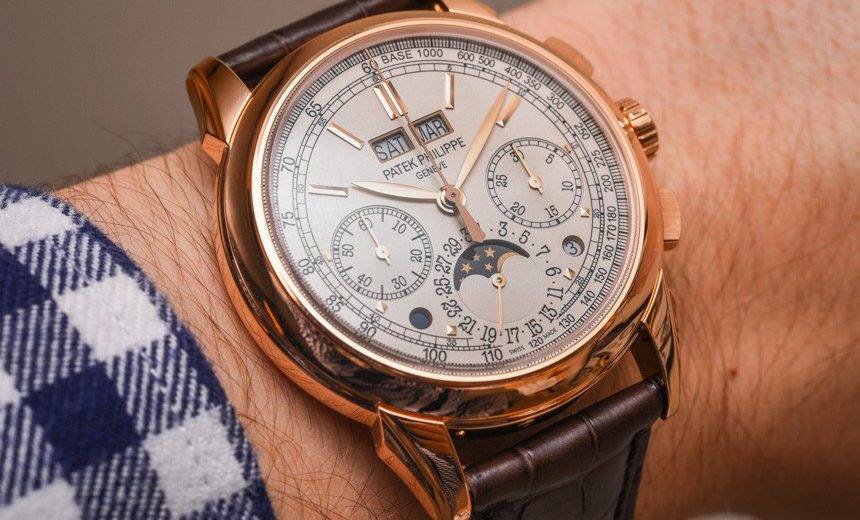
  1. Pricing is out of control.  We ALL know this to be true.  Walk into a retail store and try to buy a nice watch for less than $9000 retail.  It is incredibly difficult.  Watches that were in production 10 years ago now routinely cost double for the same piece.  10 years ago, a Patek perpetual chrono cost about $35,000.  Now $135,000.  Most of the interesting stuff starts at around $100,000.  This is insanity.  Brands need to control their costs better and maybe stop lining their pockets so thickly.  This can only continue for so long before a critical mass of collectors realize things have gotten out of control.
  2. Explore new sales channels.  The internet is the most power sales tool in history.  Sorry for my retailer friends, but why are retailers getting the same margins they were before that marketing and sales channel existed?  In many cases, why are they even necessary?  Want to cut costs to bring pricing back to earth?  Here’s a great place to start.  The sales pipeline is stuck in the past.  The answer is not just to open up fancy brand boutiques and keep the margin, the answer is to streamline and cut prices.
  3. Create products with soul.  Aside from a few independents and the occasional big brand release, most new watches have no soul.  A mechanical watch either has to be art or extremely practical.  If it’s over about $10,000 you can toss practical aside.  So what we have is an industry trying to make art, but 95% of the artists are untalented dilettantes who in most cases don’t even understand what art is and that it is their job to make it.  To make a watch for $200,000 where things flip around and at precisely 8am it shoots water in the wearers eye and says “I love you” is not art.  To make something just “because it’s cool” is not art except for a very very small number of true tastemakers who have such a solid grasp of the product that it works.   I’m sorry, but most of this stuff is shit.  The product people in the industry need to take a hard look at why mechanical watches exist and what they can truly offer of value – not repetition or novelty.

Will we see this at SIHH next week?  Of course not.  And so I wish my friends – the good guys – good luck at the show, and I will enjoy reading about it from Los Angeles.

Moving on Part 2 – Why and What Next?

If you missed my post yesterday, I am leaving my position with MB&F.  First of all, I got so many amazingly nice emails and phone calls.  Thank you very much.  It is great to know that people appreciated the job I did.  Another common comment was that of surprise or shock that I would leave, and curiosity as to what I am doing next.  I want to provide a bit more information.

First, my leaving in no way reflects on MB&F.  They are fantastic people, running a fantastic company.  I greatly enjoyed my time there and am proud to have helped them get to where they are.  We are parting on very good terms, and I have made it known that I am available to help them in the future should they need anything.

So leaving really came down to two things – personal goals, and timing.  Most importantly, I am ready for a new challenge.  Learning a completely new industry, new skills, and meeting so many great people has been an amazing challenge and growth experience.  Now I would like to synthesize that and all of my previous experience to create something really big.  And the timing was right to make the switch.  I am confident that the gains I have achieved and contacts I have made are stable enough that I can hand them back to our Geneva office, and they will continue here in North America without losing too much momentum.

So what is next?  Honestly, I am still deciding.  I have a few ideas of businesses I would like to start and some interesting job offers.  Some are watch related, some are not.  I got into the watch industry almost by accident.  Now I want to take a step back and make a real decision if I want to get back into it or not.  Most importantly, I want to work with super bright, driven people who are focused on creating something important.  I was lucky to have that experience with MB&F, and I hope to find or create it again.

Of course I will keep the blog going and keep everyone updated here.  If you have any questions about my leaving or my time in the industry, now is a great time to ask and I’ll try to write them up as posts.  Thank you again for the support – the future is very exciting!

Reasons NOT to Buy a Mechanical Watch Part 2: The World is Out of Ideas

If you missed my post Thursday, Jack Forster is doing a series on why NOT to buy a mechanical watch.  I’m commenting here.  Today is part 2: Watch designers have painted themselves into a corner and run out of things to say.

Well isn’t this a meaty topic.  I will direct the conversation by first modifying the premise: *SOME* watch designers have run out of things to say.  With that modification comes my biggest complaint with Jack’s point and that is he is arguing this is a product of the industry and watchmaking in general.  I would argue that this is because there are very few really good product people in the industry.

First, going back to my somewhat provocative recent post (Chronometry, who gives a sh!t?) I think a vast portion of the industry is missing a basic understanding of WHY they are doing what they’re doing and what a mechanical watch is in 2011.  Then you add risk aversion, design by committee, focus on sales and marketing rather than product, and a whole slew of other depressing corporate issues and you’re left with uninspired and confused watches.

There are some genuinely talented and passionate designers in the industry.  They have a very clear raison d’etre.  For them, ideas are a dime a dozen.  They have genius products lined up for years.

Unfortunately, most consumers are not that well educated.  The bad sells as well or better than the good in most cases.  This gives the wrong feedback to the people in charge.  If we educate customers and make them more thoughtful purchasers so that the junk dies and the cream comes to the top, you’ll see tons of amazing products for years to come.  In the meantime, I will continue to cringe a lot.

Jack Forster: Five Days, Five Reasons to NOT Buy A Mechanical Watch

For those of you who do not know Jack, he is truly one of the most eloquent and deep thinking watch writers in the world.  He has just posted a new series on Revolution Online to play devil’s advocate.  Five Days, Five Reasons to NOT Buy A Mechanical Watch.

I like this idea a lot.  I’m going to follow his series here and post some comments as he goes.

The first reason is “They are bloody expensive”.

A fitting place to start.  Most of my friends are not into watches and not fabulously wealthy.  I generally recommend they don’t even bother with a mechanical watch under $3000 or so – and at that you’re really looking at vintage to get good value.  The pieces I find to be particularly worthwhile are all in the yearly salary range.

So yes, this is a very fair criticism.  The way I deal with this personally is to always remember that in general, these are ridiculous purchases.  Therefore, in order to justify their merit, they have to be something really special.  That is why the general tone of my posts is to focus on intangibles, historical significance, etc.  Some pieces, upon close analysis, seem to be bargains even at very high prices.  Others fall completely flat.

This also brings up one of my biggest gripes with the watch media (see Jack, I praise and then I taketh away ;) ).  Who is looking out for us and holding these brands accountable?  Why are there watches that cost 100% more for the exact same watch now than they did 6 years ago?  Why is the media so shy to question where the value is in these things?  I see the tremendous amount of work, risk, and skill that goes into creating pieces at MB&F and even at the high prices they seem like a bargain (no one is getting rich off of MB&F, unfortunately).  There are other watches I see at the same price points that are just silly – offering no value at all.  I do believe the watch media has completely dropped the ball on educating the public as to which is which.

Let’s see what Jack has up his sleeve for Reason Number 2…

EDIT: As clarified in the comments below.  I use MB&F as an example not to say that they’re the only brand making good watches, but simply because I get to see the entire process there so I can be 100% certain in my assessment

More Watch Philosophy – the Haldimann H9

In case you missed my post this morning, please look here to find out about all the changes to the site and visit the new forums!

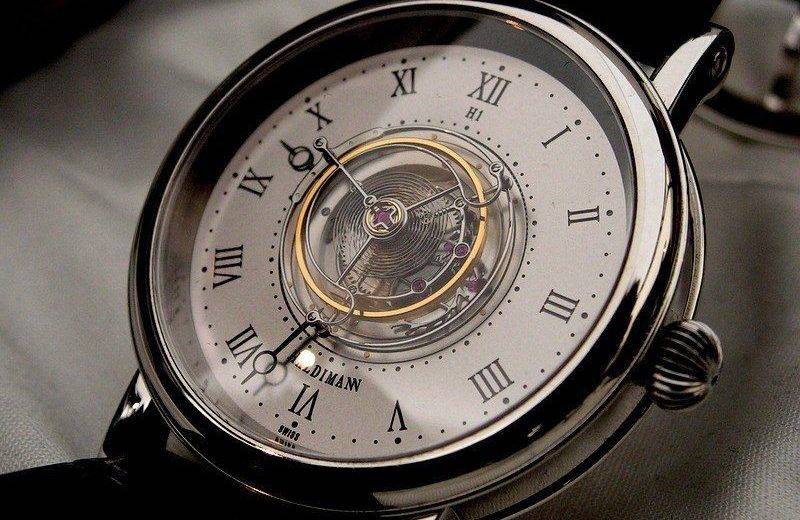
For those of you who are not familiar, Beat Haldimann is one of the most incredible watchmakers in the world.  He is one of these guys who crafts nearly everything by hand.  His first big piece, the H1 is a stunningly beautiful central tourbillon.


Haldimann H1 from PuristSPro


Just as it seemed as the world had another high end classic watchmaker, Beat went off the rails.  First, he created the H8.  It is nearly the same as the H1 except a few minor details.  First, the tourbillon is bigger.  And second, there is no time indication.  Yes, you read that right, THERE IS NO TIME INDICATION.


Haldimann H8 taken by Francois Xavier


Just posted on PuristSPro recently comes the Haldimann H9.  It is an H8, but the sapphire crystal is completely black so you cannot even see the tourbillon that is not indicating the time.


Haldimann H9


If you are asking yourself, “Self, WTF is going on here?!” then you are probably very sane.  However, I must admit that I love them, and here is why:

This is art.

Almost every brand will tell you that their watches are art.  Some are closer than others.  Beat has successfully created true art.  Not pieces of design, not craft, real contemporary art.  The H8 asks and answers a question.  What interests us about mechanical watches?  The H9 pushes that one step further.  They completely remove the utilitarian aspect from the horology, leaving only the essence and a void that must be filled by thought.

I believe Beat has succeeded where many others have failed.  These watches will certainly open him up to criticism.  Frankly, they will probably never be appreciated how I believe they should be.  But I am happy to know that someone else out there “gets it”.

Here is a video from youtube of some of Beat’s creations.


It’s the Journey, not the Destination

My friend Gary made a great post on PuristSPro detailing the pieces that he has added and subtracted from his collection recently.  Not only is the collection fantastic and the photography top notch, but the notes and introspection add a glimpse into the true power of watch collecting.

Recently I had a somewhat tongue-in-cheek twitter discussion with Jack Forster about the concept of “owning” a watch.  I generally think of myself as experiencing rather than possessing and therefore move fluidly between experiences.

And for me, this fluidity is where the real magic of this hobby takes place.  First in terms of personal growth, each step is a process in honing one’s own tastes.  You begin to first learn what interests you and what does not.  Later that turns to what is important and what is not.  And finally it ends with the simple question: WHY?  The lessons I have learned in this journey have helped me untangle mysteries in every facet of my life.

And even more importantly, being open to new experiences opens you up to the community.  I looked through my database yesterday.  Over the last decade I have corresponded with over 500 people privately about watches – sharing advice, looking to buy or sell, etc.  Many of these people I now consider close friends.

I often think about what the point of these objects is, and this is the best answer.  They are an excuse to celebrate the creativity and life’s work of amazing creators, to facilitate introspection, and to foster communities of self-selected individuals.  The watches themselves really become secondary in the grand scheme of things.


Chronometry – Who Gives a Sh!t?

Yesterday, the results of the 2011 Concours International de Chronométrie were announced.  This is a competition where brands submit their pieces to be tested under numerous conditions and shocks to see which keeps the best time.  Unfortunately, my subject line will be the only of its kind in the industry, because really, who cares?

This is one of many cases where I feel the watch industry is asking the wrong question.  Guys, you’ve lost.  Your watches that cost more than cars tell worst time in all tested conditions than a watch McDonalds gives for free with a Happy Meal.  In fact, maybe next competition they should enter a McDonalds Happy Meal watch to end this silliness once and for all.

Of course these tests have a rich history.  Before quartz, they made a lot of sense.  It was important to focus on precision when no alternatives were present.  But now that problem is solved.  Precision is a weakness of mechanical watches, not a strength.

Every watch company and executive has to have a clear answer to one question: “Why make a mechanical watch?”  ”To strive for precision,” is an answer that lies somewhere between insane and idiotic.

So congrats to the winner, Greubel Forsey‘s Double Tourbillon Technique.  It is a fantastically beautiful watch for all the right reasons, not made one iota more interesting by this contest.


Greubel Forsey Double Tourbillon Technique shot by Andrew H of PuristSPro

Currency Comeback, USD/CHF

Last time I wrote in, the US Dollar (USD) was crashing with respect to the Swiss Franc (CHF), or perhaps more accurately: the CHF was surging against the USD.  Most major world currencies right now have a severe risk of inflation, as central banks are printing money to try to get out of their debt.  At some point, this money started to flow into the CHF as it was perceived to be one of the most stable currencies.  As Euros and dollars were traded in mass for CHF, their value in CHF terms plummeted.  The bottom came at .70 CHF/USD, a true disaster level for the watch industry in the US, and a major problem for the Swiss watch industry in general.

Especially at the high end, almost all of the costs of producing a watch are in Switzerland and denominated in CHF.  However, most pieces are exported.  So the expenses are fixed, and suddenly the revenue is worth 30% less.  Big problem.  Of course the “solution” is to raise prices.  That is why you saw multiple price increases this year from almost every brand.  In general, they are not gouging, simply trying to retain their necessary margins.  That presents it’s on slew of problems.  Of course as price increases, quantity decreases.  It becomes increasingly hard to make revenue numbers, not to mention you start to see inventory levels build up in showcases.

About 6 weeks ago, the Swiss National Bank decided to intervene.  They basically set a target for CHF/EUR and started buying EUR to get there.  Again, if you are buying EUR and selling CHF, the CHF will start to be worth less with respect to the EUR.  This is a dangerous move for Switzerland.  They are a small country and they are growing their reserves dramatically, not to mention those reserves are now denominated in EUR which is a particularly risky currency right now with all that is going on with Portugal, Ireland, Greece, and Spain (they are basically all bankrupt and since they are on the EUR, have no central bank to print their way out of it).

But here in the US, we don’t particularly care about the financial help of the Swiss, we just want our watches!  And thankfully, the move has greatly lessened our pain.  With USD now at around .90 CHF, we have seen our purchasing power come back dramatically.  Unfortunately some brands were a bit overzealous with their price increases and now are a bit stuck.  It’s hard to lower prices and tell retailers or end customers who have bought the watch that it is now cheaper (for a retailer that kills their margin).  I was in a retailer the other day and saw a showcase of a usually hot brand that is now filled with double the inventory of normal – the sales people were all complaining that they cannot sell them at the current prices.

Luckily with MB&F, I saw this coming and postponed our last price increase as long as possible, eventually canceling it when CHF started to fall.  We did not have much to invoice, and I sensed that something was going to give.  It’s easy to raise prices, but, as I mentioned before, difficult to lower them.

I don’t think there is a bigger story in the watch industry than this.  It affects all of us at ever step along the chain.  Now all eyes are on the Swiss National Bank to see how long they can stick to their policy.  Hopefully it works out well for everyone.  I will keep posting on it here as developments occur.

Can Foursquare Kill Daily Deals and Save the World?

I haven’t written a Tech Tuesday post in a while (or any post for that matter. sorry).  With a couple hours left, I thought I’d jot down something I’ve been thinking of quite a bit.

I love Foursquare.  To me, it is perhaps the coolest mobile app – the true future of mobile.  However, at present I have found almost no use for it.  For the last couple months, I have been forcing myself to check-in as often as I can remember.  I wanted to understand the service and see what I was missing.  To date I have 21 check-ins.  Granted I am not a power user, but in those 21 check-ins, the only benefit I’ve gotten is an occasional tip of what I should order in a restaurant.

This frustrates me.  We all know mobile is the future.  We all know location is a game-changer.  How can the biggest location specialist provide such little value to users?

I have become particularly interested in this after reading Rocky Agrawal’s series of pieces on TechCrunch on the danger of daily deals sites such as Groupon.  His general thesis is that the model is going to kill local businesses – driving too many cheapskate customers at prices that are too low.  It all comes down to loyalty.  Daily deals make sense for businesses if they create new, loyal customers.  A restaurant can serve a customer at a loss if it knows that customer will be back multiple times.  The problem is that these daily deals sites are actually destroying loyalty rather than creating it.  They are teaching customers bad habits.  And Groupon is incentivized against loyalty.  Their entire business rests on selling you the next deal at the next place.

Who is best positioned to drive loyalty?  Foursquare!  They can identify loyalty, reward loyalty, and ultimately create loyalty.  They are in a position to offer incredible value to brands, merchants and consumers (not to mention some nice value for themselves and their investors).

Why isn’t this happening?  Your guess is as good as mine.