Unbranding Redux

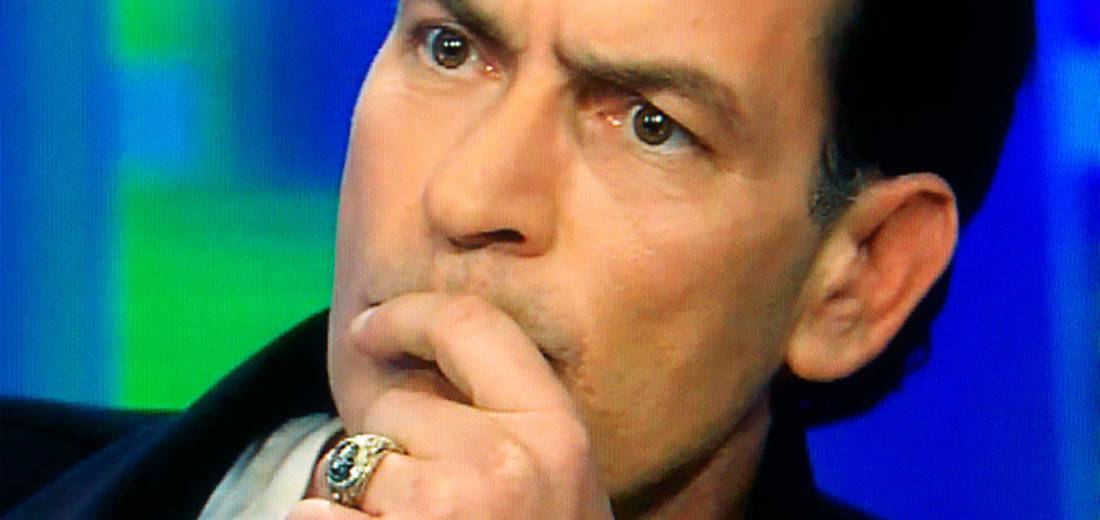
My Unbranding and Product Placement post was a real fan favorite, so I had to smile when this morning, TMZ reports that the watch that sparked the fight between Charlie Sheen and his “companion” for the night was a Patek 5970.

Aside from the fact that Charlie has better taste in watches than most other things in his life, what do we learn from this?  Is it positive, negative, or neutral for Patek?  To me, this one feels like a case of “any publicity is good publicity”.  As big of an a-hole as Mr. Sheen obviously is, I can’t help but think his choice of a Patek still contributes positively to the brand.

Any thoughts?

Concussions in the NFL and Short-Sighted Thinking

For the first time on TickTocking, I’d like to talk about sports for a minute.  American readers will know that over the last 10 days, the NFL has gone on a crusade about illegal hits to the head.  In fact, there has been more and more controversy surrounding concussions in football for a couple years now, including this great piece by Malcolm Gladwell that caused quite a stir.

The question is, why are these hits so much more vicious now?  The first argument is that players are stronger and faster than ever before.  This is obviously true, but I don’t think it gets to the root cause.  Others argue that it is the culture created by highlight shows and youtube – big hits get more airplay.  Also true, but missing the bigger point.  Really I’m a bit surprised that I have not seen a more thorough analysis of the clear driving force: MONEY.

Players now are getting astronomical salaries.  Before the mid-80′s, only the very best players would make enough money to be able to retire after football – and even then it was not a high flying lifestyle.  Now players can sign single contracts that will make them and their families set for generations.  Anyone with a basic foundation of economics can recognize how that skews incentives.  Why are the players stronger and faster?  Because they will dedicate every second of their time and every bit of their health to exacting the fullest potential from their bodies.  The defensive player is willing to launch himself and risk injury, and the offensive player is going to try to get back in the game asap even with a concussion because it’s worth it for that sort of money.  Before the money was so big, players had to have concern for their longterm health.  Now, sacrificing health in the short run can be a smart decision.

Why am I bringing this up here?  I think you can see this to an extent in the watch industry as well.  We have just gone through an era of spectacular price increases and quantity increases at the same time.  Some people were making money hand over fist.  Any time the money gets that great, you risk incentivizing short-sighted thinking – companies not trying to build a brand, build trust, create great products, just trying to make as much money as they can as quickly as they can.

The NFL has a tough problem.  How do you stop people from taking risks with their own bodies?  Luckily in the watch industry, we can fix our own problem – make sure consumers are well informed and hopefully they will choose to support the many wonderful companies making truly amazing things.

Discounts

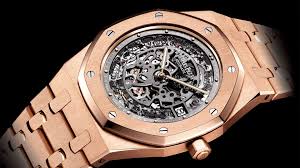
There are a few things in this industry that are just plain broken.  To me, one of the most glaring examples is the system of selling watches at negotiated discounts.  Recently in a Facebook group there was a discussion about an Audemars Piguet model that, to my knowledge, has not even been delivered yet.  Multiple people – not dealers – were offering to get the piece at 30% off.  Obviously this is broken.

Of course, like anyone else, when I buy a watch I want to buy it as cheaply as possible.  However, the current system is bad for everyone.  The only other product I can think of that people pay different amounts for the exact same item is cars, and that is hardly an industry to be copied.

It is bad for brands as they completely lose control of their market.  It is bad for retailers as they are always dealing with unhappy clients and ground-down margins.  And it is also bad for customers.  If watches were sold at their retail price like most other goods, they would be much easier to buy and they would retain their value much better in the short run.

Of course, the solution is not easy.  All three parties: brands, retailers, and customers, are complicit in the state of things today.  There is no doubt in my mind though that this cannot continue forever.  At some point, I do believe that a watch will cost what it costs and no one will even think about negotiating.  And we will all be better off.

TickTocking Tone

Probably the biggest influence on me in starting this blog was Fred Wilson of Union Square Venture’s AVC.com.  As the title suggests, he is a VC – a venture capitalist – involved in a lot of great Web 2.0 companies like Twitter, Foursquare, and Disqus, the service I use for the comments on this blog.

Fred’s blog is about his experiences and his opinion.  It does not rely on product reviews or news stories for content.  There are plenty of great blogs to get product info, news, videos, whatever else you want.  By keeping to his opinion, his content is completely unique.  I think you can see the parallels to TickTocking.

So I really liked Fred’s post today about editing himself.  I think he and I see the world very similarly and recognize the value of candor.  That being said, there is a limit.  Everyone knows that when their wife asks how she looks in a certain dress, there is only one right answer.

I had wanted to start this blog for years, but could not quite get the tone right.  I started writing private test posts.  One iteration was too far towards product and didn’t feel genuine.  One was too much complaining about major issues that I hate in the industry.  While it would have been a great read for a week, in the long run it would have alienated a lot of people, made it very difficult to do my job, and, at the end of the day, no one wants to read a bitter blog.

Finally, I think I found the right tone.  I am trying to be completely honest while focusing on things I like or find interesting.  If I have a major problem with something, it is best left out of the blog for everyone’s sake.  Yesterday’s post was the closest I have come to tackling a negative subject, but it was general and rooted in a news story.

I hope this project is coming off with the tone I intended.  I am so happy that some of you really like it.  If there is ever anything you want to see more or less of, feel free to let me know.  I may not oblige, but I would love to hear the suggestions.

The Editorial-Advertising Divide

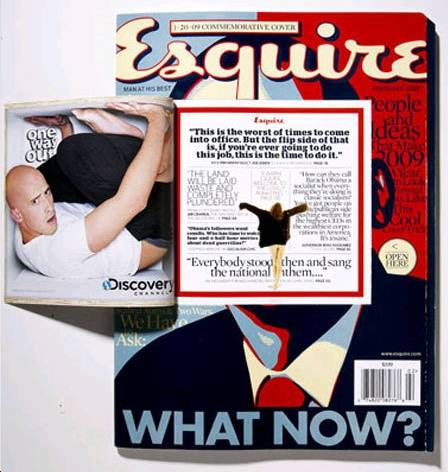
I came across this story today.  As we all know, the magazine industry has been particularly hurt over the last few years.  Squeezed from all sides, one of the first things to go at some outlets was journalistic integrity.

The magazine model perhaps was flawed from the beginning.  They create content for the readers.  However, the readers pay only a small price for it – the rest is subsidized by advertisers.  It has always been held as sacred that editorial content (content created by the magazine for the readers) be kept completely separately and easily distinguishable from advertising content (created by brands for the readers).

We all know how this story goes.  Not all magazines, but certainly some, have little to no separation.  Obviously this is a particularly short-sighted stance.  To give up your editorial control to advertisers means giving up the core competency of the business.  It is doomed to failure in the long run.  But, in the short run, everyone keeps their jobs and the magazine stays in print.

You would think that the American Society of Magazine Editors would realize this is damaging to the long-term interests of their constituency: MAGAZINE EDITORS, and would take a stance against this sort of behavior.  Shockingly, they have done the opposite: loosened their guidelines to shrink the wall between editorial and advertising.

Of course this is all particularly relevant in the watch industry.  Watch brands are HUGE advertisers in all sorts of magazines.  Watch content is also particularly easy to “advertorialize”.  It only takes a few words to call a watch a brilliant piece of horology, and most readers do not have the knowledge to call BS.

So, the old adage has never been more pertinent: don’t believe everything that you read.  It is more important ever to be educated consumers, not reliant on any single opinion.  Also, there are tons of fantastic writers, blogs and magazines.  Let’s all support the good ones.  At the end of the day, the readers will get the final say on how much integrity we expect from our media.

Daily Deals

For this Tech Tuesday, I wanted to write on perhaps the new hottest web 2.0 trend: daily deal sites.

By now there are many of them and they all have certain niches, but the basic idea is the same.  Every day a new product or service is offered at a heavily discounted price in a limited quantity and for a limited amount of time.  There are usually some network effects built in as well; for example on Living Social if you get three of your friends to buy the same deal, yours is free.

Nice idea, nothing too creative – what’s the big deal?  The big deal is that these companies are doing unimaginatively huge business.  Living Social has raised $50 million and just announced they have 10 million users.  Groupon, the first and most successful company in this space, is reported to have turned down a $1.7 Billion offer from Yahoo to buy the company.  My favorite, the luxury focused Gilt Group, has raised $83 million.

Why?  Sign up and you will find out.  The sites are completely addicting.  The deals are delivered to your inbox, so all of a sudden you find yourself buying $18 worth of Gelato at 6:30am, or that winter coat you’ve always wanted on a 100 degree day in July (yes, I have done both).  Local businesses like small cake shops are able to do $20,000+ of business in a single day and closeout items rarely make it until the afternoon.

While I can totally understand these huge revenues, I’m still not sure I can see the huge valuations though.  There are literally NO barriers to entry in this space.  The sites are simple.  Clones are popping up every day and the only way to win is to have the best inventory of deals.  That is great for us as consumers, but must be a bit scary for those invested at these high valuations.

With a hot business model and low barriers to entry, the obvious question is: would this work for watches?  I would imagine that it would.  Who wouldn’t make an impulse buy here or there if a great watch showed up in your inbox at a great price?  The major problem would be securing the inventory.  Any strong brand will not want to participate because it cheapens their brand and their other products.  Similarly, if a retailer were to do this with their inventory, the brands would shut them down immediately.  The only way I could see it working would be with pre-owned and vintage watches, but margins are often so slim that I’m not sure there is much room for discounting.

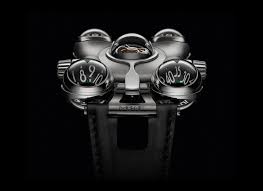
That being said, I would not be surprised if a daily watch deals site pops up at some point, and I for one am looking forward to it (as long as they never have an MB&F!).

Mega Complications

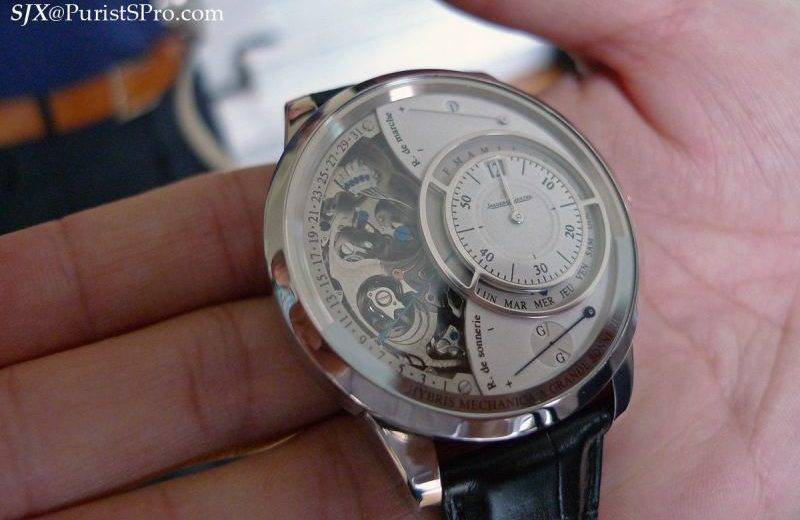
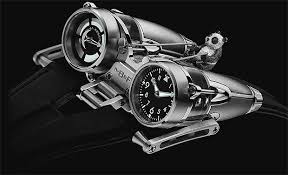
Hodinkee has a great look at the JLC Hybris Mechanica today.  With 26 complications including a Grande Sonnerie, it is one of, if not the most complicated watch ever made.

Undoubtedly an impressive engineering feat, I generally look at pieces like that and think, “Who cares?”  While this one seems pretty well executed for a mega-complicated piece, the whole concept has never interested me.  I think it comes back to a clarity of purpose.

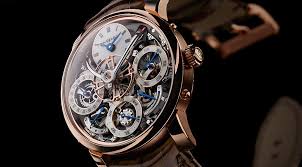
I am much more drawn to an amazing Grand Sonnerie, or a fantastic chronograph than everything in one – almost guaranteeing that the function of each individual complication will have to be sacrificed in some way.

Give me a Gyrotourbillon and a Titanium Master Minute Repeater any day, but you can keep the Hybris.

What do you all think?  Do these super complicated pieces interest you?

Watches as Investments

Meehna Goldsmith recently posted an excellent interview on Investing in Watches (Part 1 and Part 2).  The topic is very interesting, especially as it has long been taboo to discuss on other internet forums.

First of all, I would not buy watches as investments.  There are plenty of investment opportunities in the world, and while I will argue later that watches could potentially be a good one, it is too uncertain now.  My own watch buying is built more around a storage of a value rather than appreciation.  My goal is to not lose too much on a watch and then the pleasure of owning it far outweighs the opportunity cost of investing the money somewhere else.

That being said, I really do think watches *may* prove to be a good investment – but, here is the key – IN THE LONG RUN.  In the short run, watches depreciate.  We all know this.  I cannot think of a single product designed to actually be used that does not depreciate from its NEW state to a USED state.  But really that is a limiting view.

What I am more interested in is 15-20+ years from now.  At that time horizon, the question is no longer new or used, it is good or bad, important or unimportant.  This is when the real action starts.  Assuming people still care about watches at all (I hope and believe they will), I truly believe that some sectors of the current market have a real potential for major appreciation.  I believe that this period of Contemporary Horology created by a few amazing, independent companies – a representation of living, breathing creators – will be looked back at as an important period in watch making history.  If that is true, you can only imagine what will happen to values of whichever pieces are considered the most important, often made in quantities of less than 100 – way rarer than nearly any Patek you see at auction.

This was my favorite part of Dolly’s interview:

MG: Why do some timepieces hold value and others don’t?

DC: To understand why certain specific timepieces will surely be of value, far and above what they are worth in the market today, one only has to ask questions of history. Certain postage stamps, violins, wines and first print books were made in relatively large numbers. Even art for that matter. Were these more delicate, more easily damaged, recreated and copied, than timepieces? Didn’t they have periods of total neglect, when the educated portion of the public ridiculed, even destroyed them, and viewed them as disposable? Didn’t almost all art, wines, stamps, books, and even automobiles have extreme variations in their form and values? Didn’t the precious, highly prized examples often have common parts of low value, pedestrian components, and were mass-produced at their time of conception? Watches will outperform all of these.

If you buy pieces of real value and true creativity that are the finest representations of the culture NOW, not reproductions of history, you could be very happy at auctions in 20-30-50 years.

Hourtime Podcast

Well today is the day of my Millionaire taping so I’m not going to be able to do a full post.  Instead, here’s a link to the Hourtime podcast I recorded the other day with Ariel from ablogtoread and John Biggs of CrunchGear.

http://hourtimeshow.com/post/1302174730/episode-40-an-interview-with-stephen-hallock

Enjoy and wish me luck!  I won’t be able to report on how it goes until the show airs, but I’ll be sure to post a recap as soon as I can.

Banksy and The Simpsons

Not quite tech again, but maybe we can do TV Tuesday instead of Tech Tuesday.

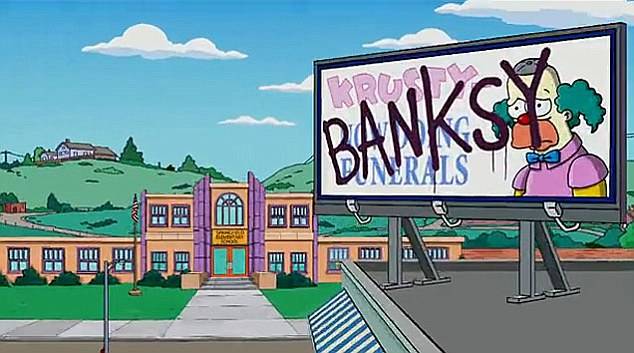
For those who have not heard or seen it, popular street artist, Banksy, wrote the opening of The Simpsons last weekend.  For those not familiar, Banksy is perhaps the most famous street artist in the world, although his true identity is secret.  His work is often political and satirical – sort of a modern day Jonathan Swift of the streets.

You have to watch this video:

http://www.youtube.com/watch?v=DX1iplQQJTo

Multiple things stick out.  First of all, kudos to the producers and to Fox for actually putting this on air.  Obviously it is very edgy material.  Also it is amazing how powerful a message can be if it is delivered with a deft touch.

The ethics of modern production are going to be an issue long into the future.  Just this year there was a major scandal surrounding multiple suicides in the Chinese factory that makes the iPhone.  One of the really special things about watches, especially at the higher end, is that they are a product of truly skilled labor.  Every part is a product of a life-long career.  Apart from any ethical issues, this serves to give the watches a real “soul”.

Thank you to Banksy, the Simpsons and Fox for making one great minute of television – a true rarity among network programming lately.